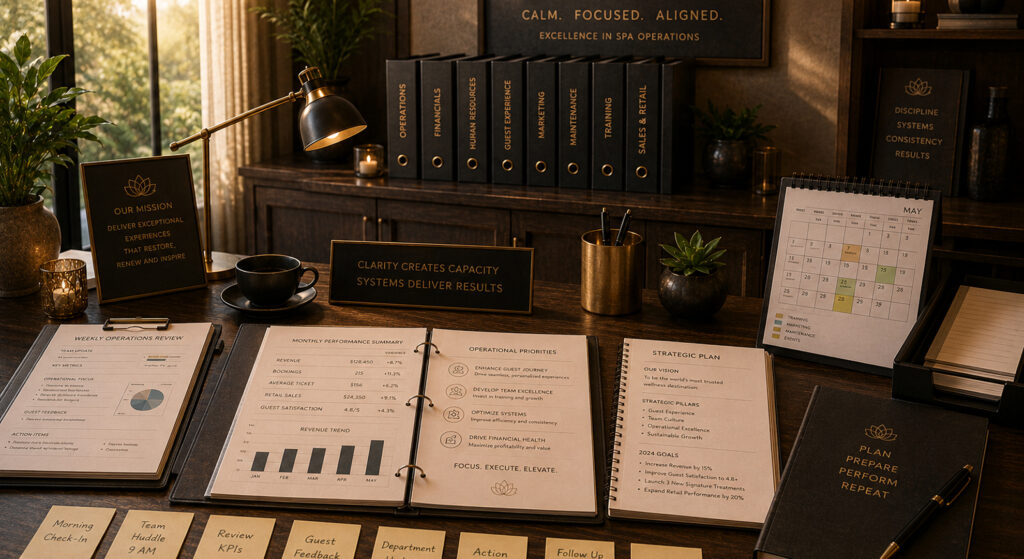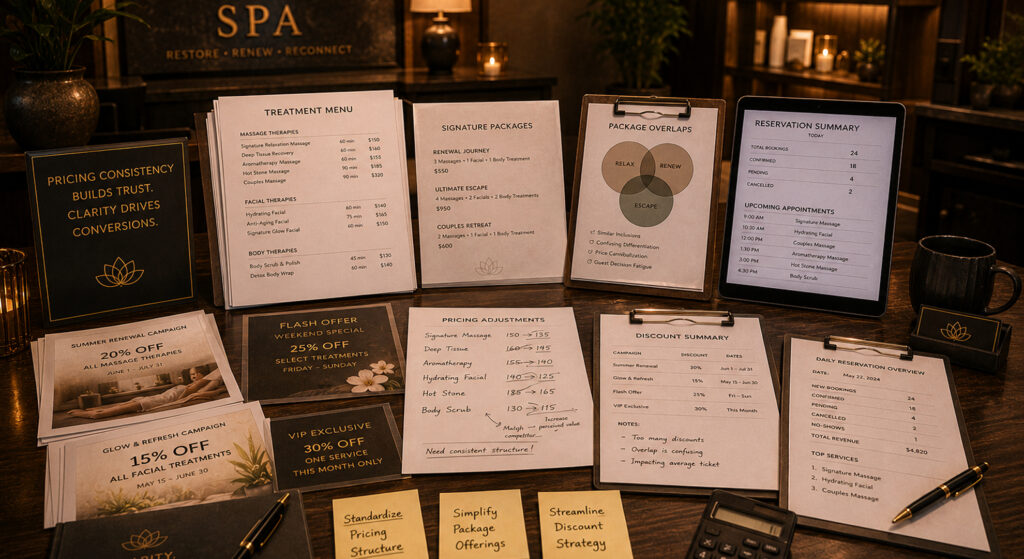
Most spa businesses do not struggle because demand is weak. They struggle because the commercial architecture — product design, pricing strategy, menu structure, or demand system — has structural gaps that quietly suppress revenue. This article examines a critical commercial challenge identified across spa operations in Bali, Indonesia, and the wider Asia-Pacific region.
Why This Matters Commercially
Revenue problems in spa businesses are almost never random. They have specific, structural causes that produce predictable, measurable effects on conversion rates, average spend, retail attachment, and guest retention. Understanding the structural causes — rather than treating symptoms with more promotions, more discounts, or more marketing spend — is what separates operations that grow from operations that stay busy without improving their financial position.
The Commercial Framework
A commercially effective spa operation is built on four interconnected revenue systems: product and pricing architecture (what you sell and how you position it); demand generation (how the right guests find you and decide to book); guest retention (how you convert one-time visitors into repeat revenue); and retail and ancillary income (how you capture the high-margin revenue that exists within every treatment). When any one of these systems is weak, the others cannot compensate.
Key Metrics and Expected Outcomes
The commercial case for addressing this issue is direct and measurable. Conversion rate improvement of 15–25% is achievable within 60 days of structural correction. Average spend uplift of 20–35% is typical when menu architecture and recommendation systems are properly aligned. Retail attachment rates can move from 5–8% to 22–35% with treatment-to-product mapping and therapist training. Rebooking rates increase from below 20% to 35–50% with structured rebooking language and follow-up automation. Each of these improvements compounds — and together they represent a fundamentally more profitable business from the same guest volume and the same team.
Practical Implementation
Implementation requires clarity about priorities, named accountability for each change, a defined review cadence, and the discipline to stay with the structure until results are confirmed. The businesses that achieve lasting improvement are not the ones that implement the most changes — they are the ones that implement the right changes in the right sequence and measure them consistently.
Download the Demand Engine or Revenue Leaks by Essential Spa Solutions or speak to one of our Consultants by booking a 30 Minute Consultation.